I am proud to present my third solo exhibition in Palestine, hosted by the Khalil Sakakini Cultural Centre in Ramallah. The exhibition opened on 22 October and closed on 20 December 2025.
I am thankful for the tremendous support from the Centre, represented by its Director, Leila Abbas, the board members, and the team who accompanied me throughout the journey and stood by me during the most difficult moments, especially when facing the unfortunate loss of the artworks that were originally meant to be exhibited. Despite this setback, the exhibition became an opportunity to rebuild, rethink, and continue the dialogue through new formulations.
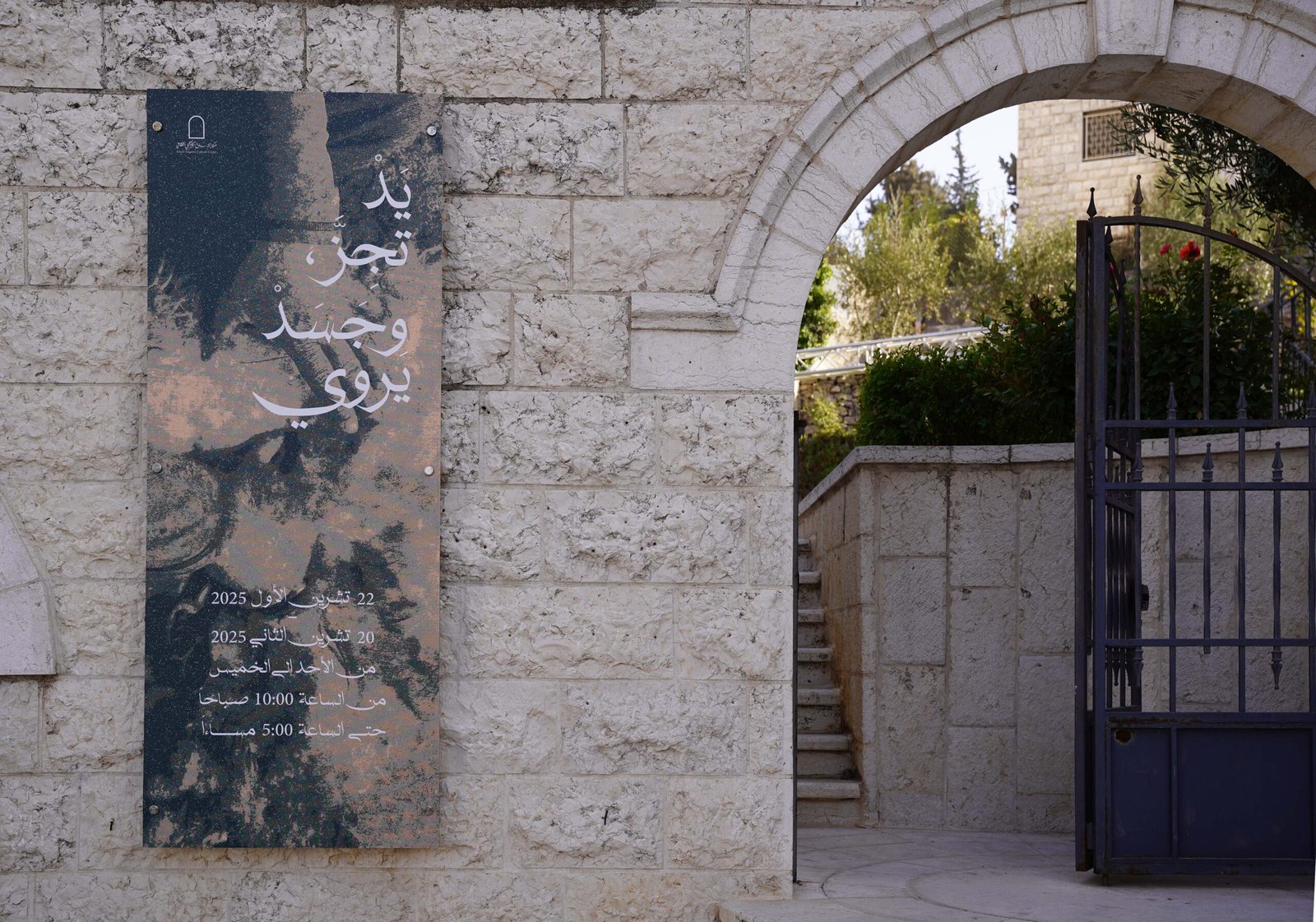
Photo: Lara Shawabkeh, Khalil Sakakini Cultural Center, 2025 
Photo: Lara Shawabkeh, Khalil Sakakini Cultural Center, 2025 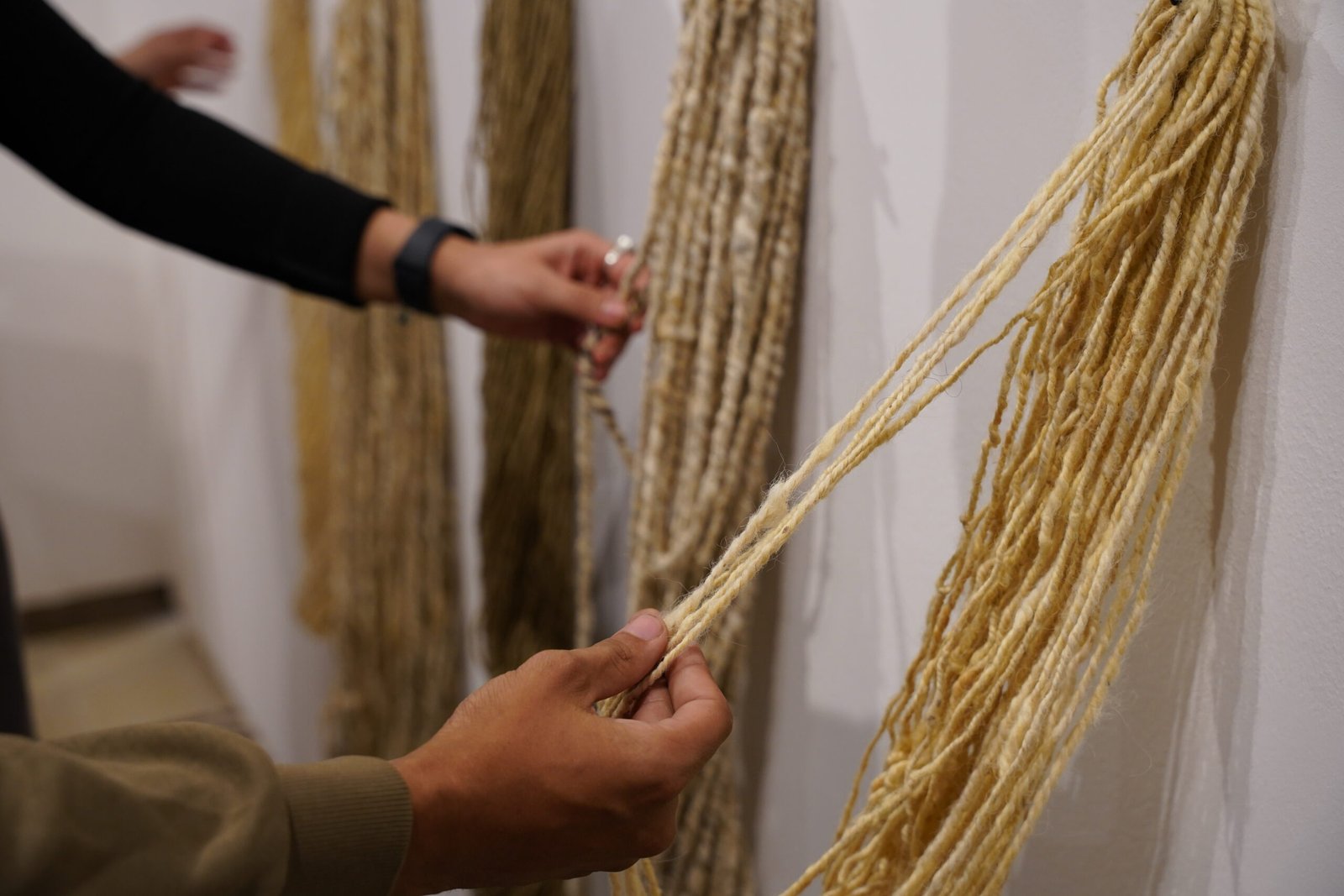
Photo: Lara Shawabkeh, Khalil Sakakini Cultural Center, 2025 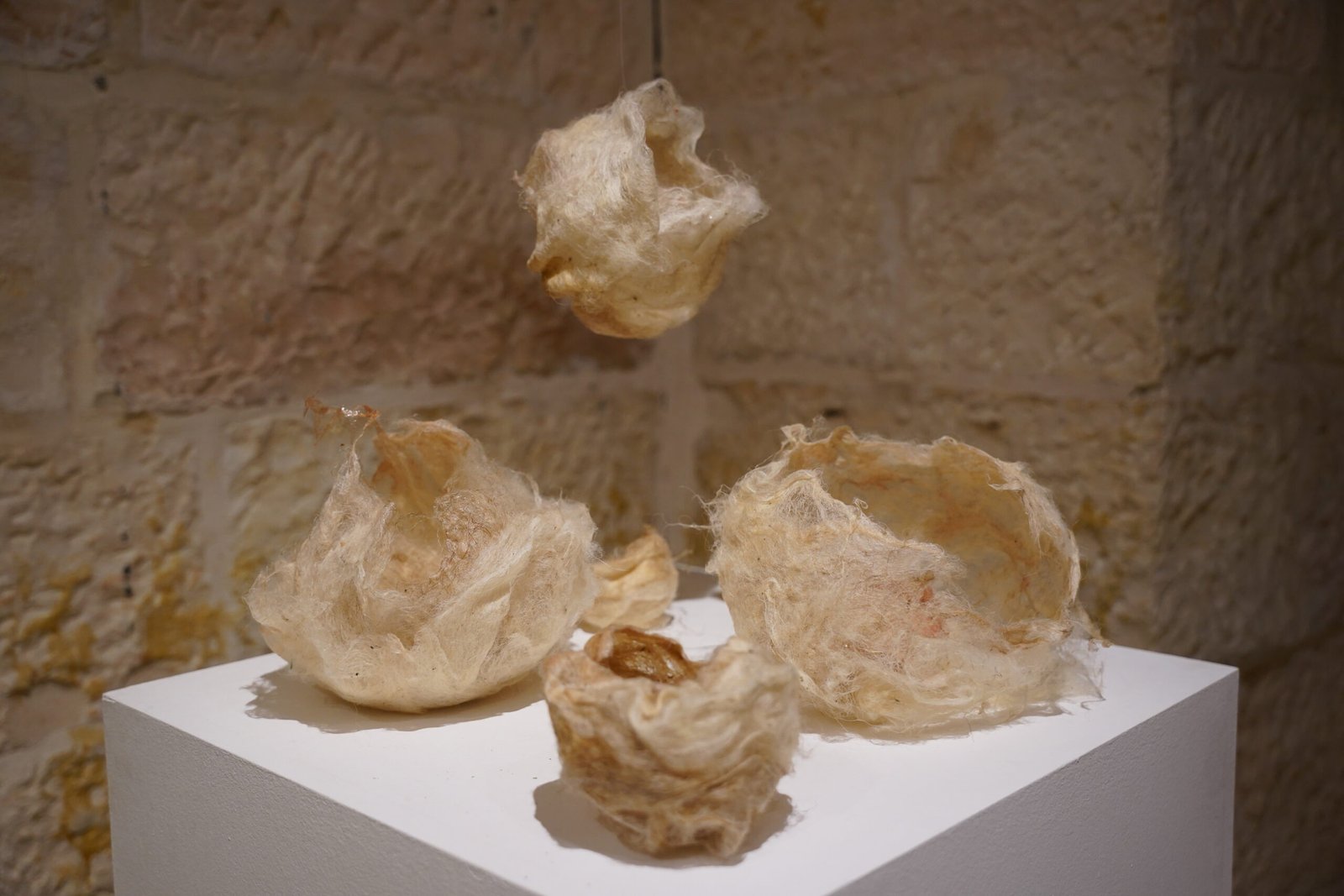
Photo: Lara Shawabkeh, Khalil Sakakini Cultural Center, 2025 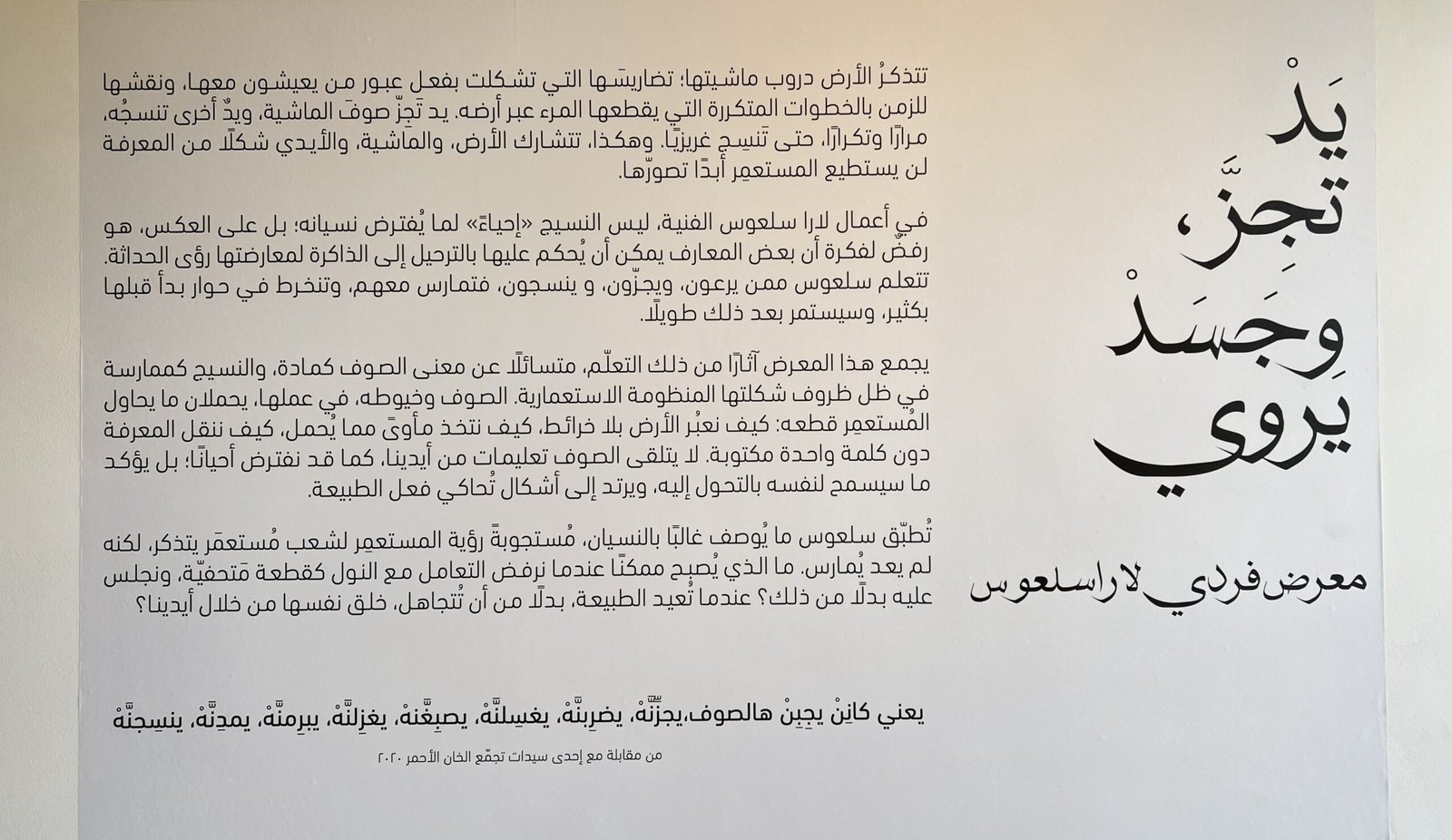
Photo: Lara Salous, 2025 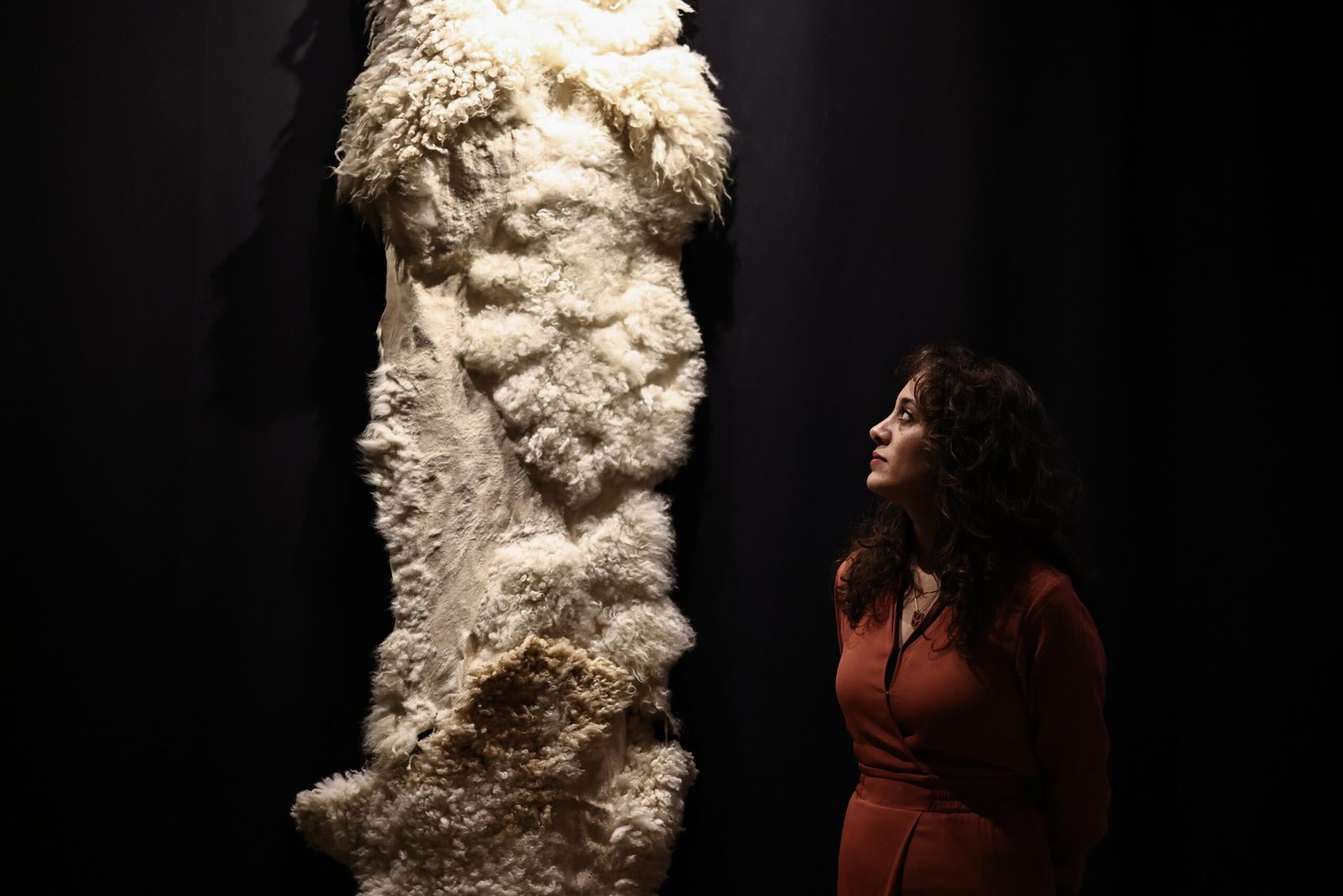
Photo: Mutasem Saqf elhait, 2025 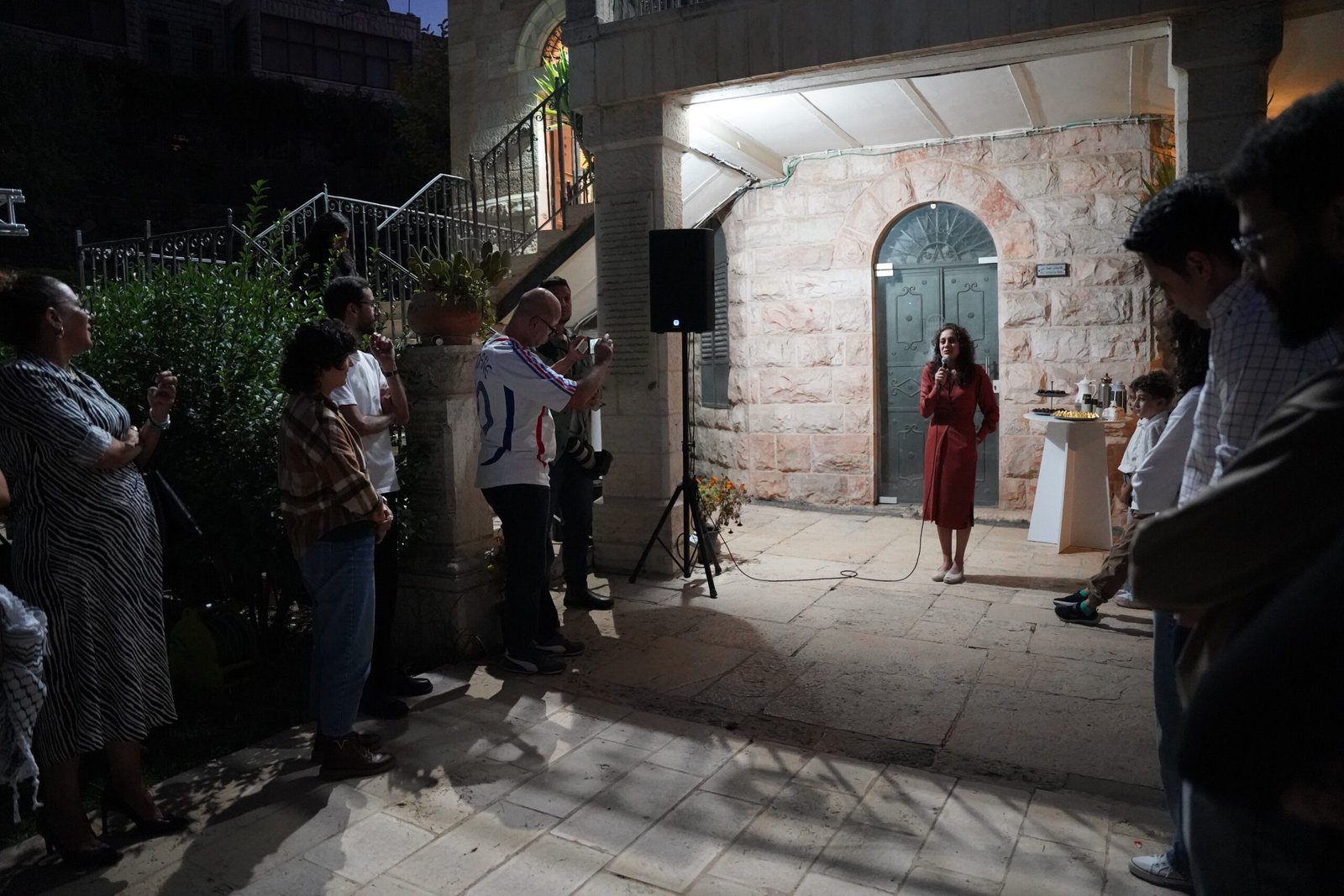
Photo: Lara Shawabkeh, Khalil Sakakini Cultural Center, 2025 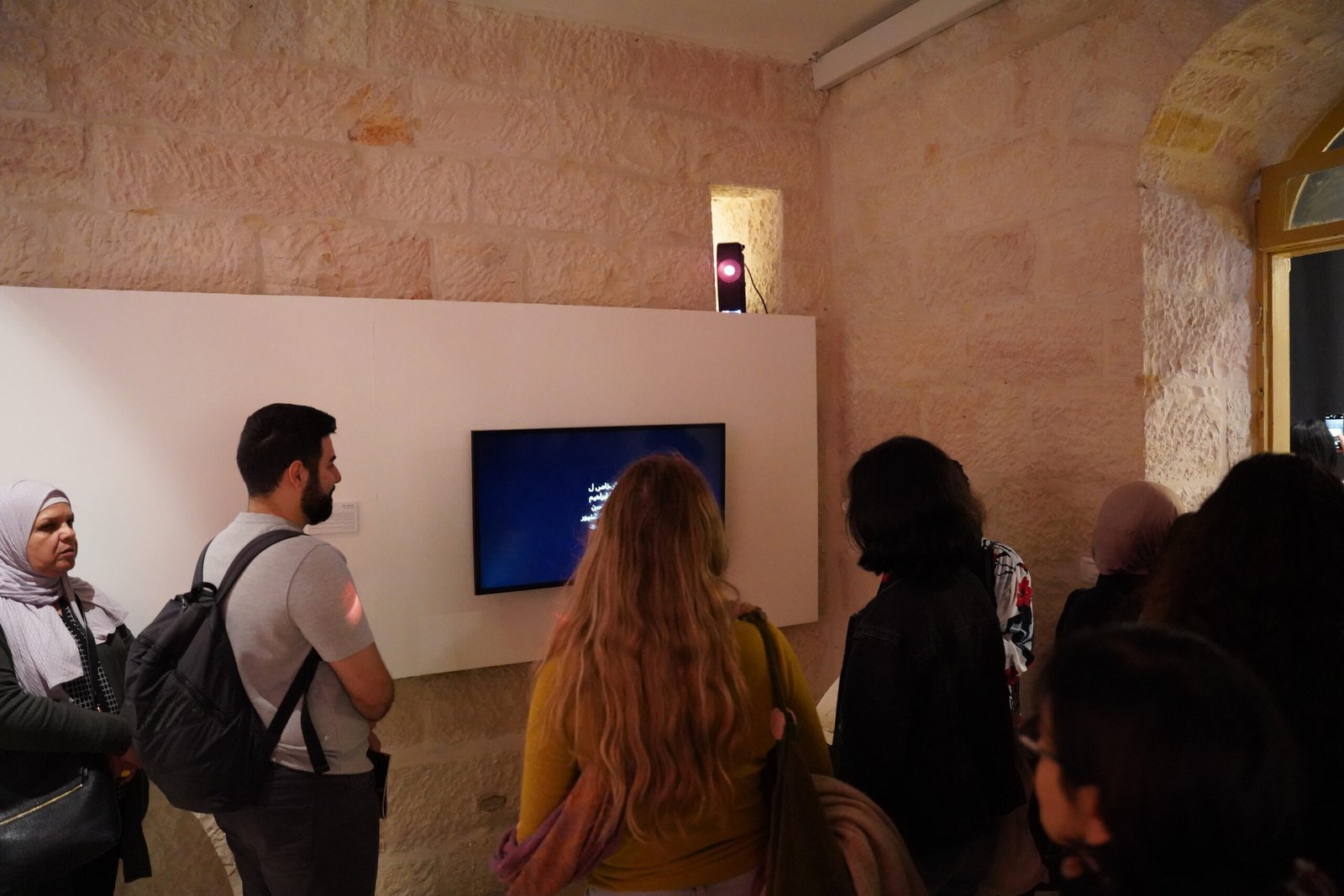
Photo: Lara Shawabkeh, Khalil Sakakini Cultural Center, 2025 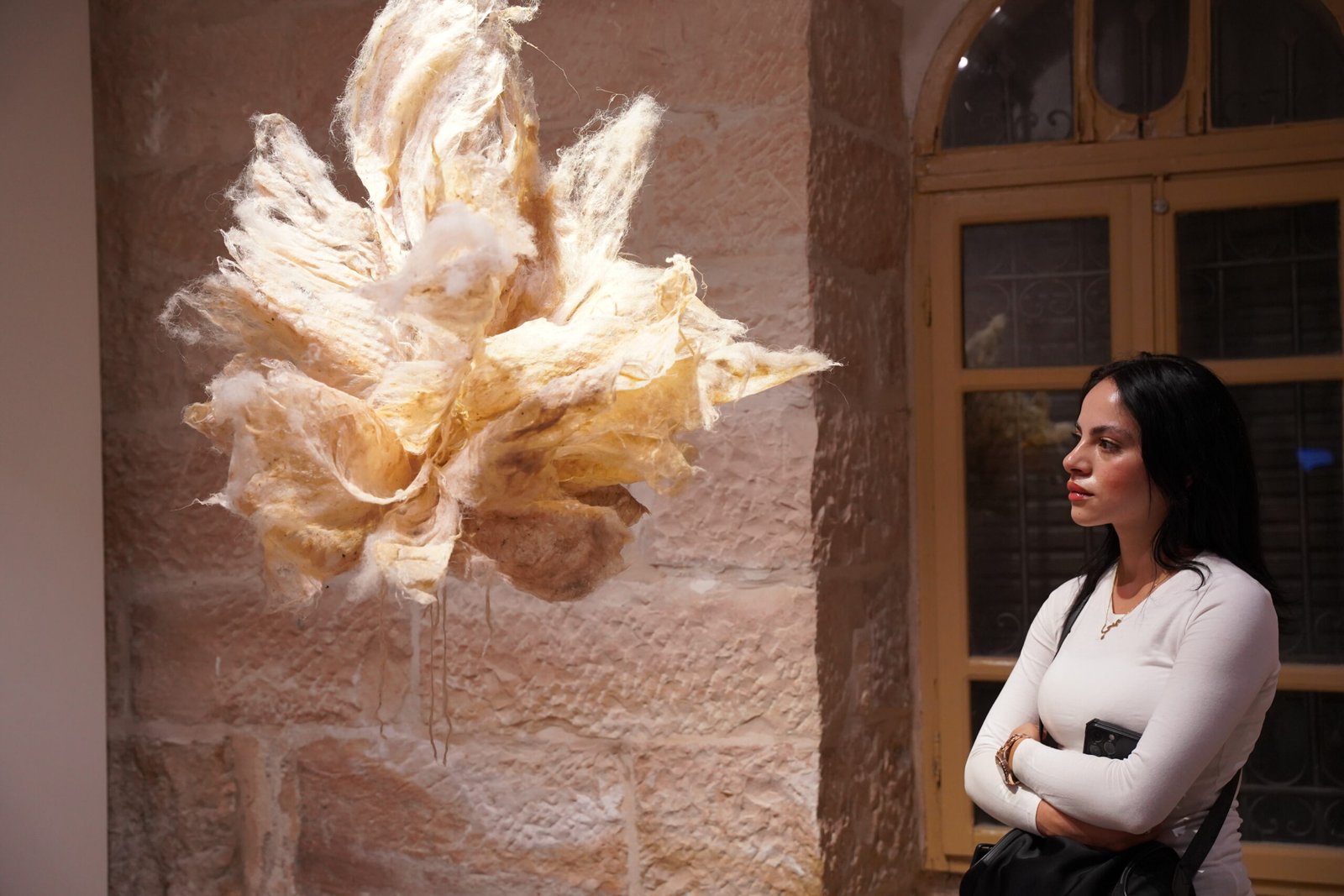
Photo: Lara Shawabkeh, Khalil Sakakini Cultural Center, 2025
Throughout the planning process, the Centre’s team and I worked closely to develop an edition rooted in the origins of my research, experience, and artistic practice in Palestine, and to present it to local audiences. Through multiple conversations and a thoughtful review of my work and previous exhibitions, art curator Elis Riziq distilled his insights into what ultimately became the exhibition statement:

”The land remembers the paths of sheep; its topography shaped by the slow traversing of those who live with it, etched over time by the repeated steps taken across one’s own land. One hand shears wool. Another hand weaves, again and again, until it weaves instinctively. The land, the sheep, and the hand therefore share a form of knowledge that the coloniser could never comprehend.
In Lara Salous’ artworks, weaving is not the ‘revival’ of what purports to be forgotten; to the contrary, it is a refusal of the idea that certain knowledge can be sentenced to memory for its opposition to visions of modernity. Salous learns from those who shepherd, who shear, and who weave thereafter, practicing alongside them, and entering a conversation that began long before her, and will continue long after.
This exhibition gathers traces of that learning, asking what meanings are carried by wool as material and weaving as practice within conditions shaped by colonial interruption. In her work, wool comes to hold what the colonizer sought to sever: how to move across land without maps, how to make shelter from what is carried, how to pass on knowledge without a single word written. The material does not receive instruction from our hands, as we might sometimes assume; it asserts what it will allow itself to become, rebounding into forms that echo nature’s own agency.
Salous puts into practice what is often described as forgotten, therein interrogating the coloniser’s vision of a colonised people who remember, but no longer practice. What becomes possible when we refuse to treat the loom as a museum object, and sit at it instead? When nature, rather than being bypassed, reconstitutes itself through our hands?”
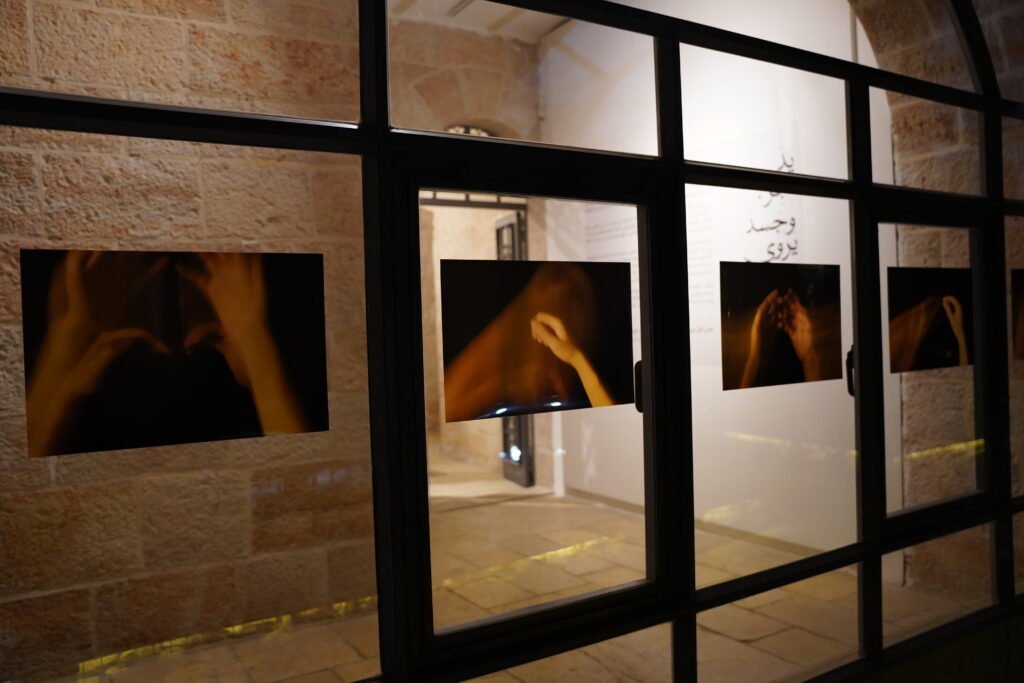
We arranged the artworks throughout the Centre’s rooms to guide visitors on a journey: beginning with “How can we practice rather than remember?” in the first room, continuing with the carriers of knowledge in the second, passing through the deformed landscape of herding in the third, and arriving in the final room, where the horizon of the material opens fully.

At Leila’s suggestion, I added a personal layer to the exhibition by writing my “Woolen Contemplations” not as duplication, but as reflections that carry forward subtle, ethereal knowledge to the audience about my journey.
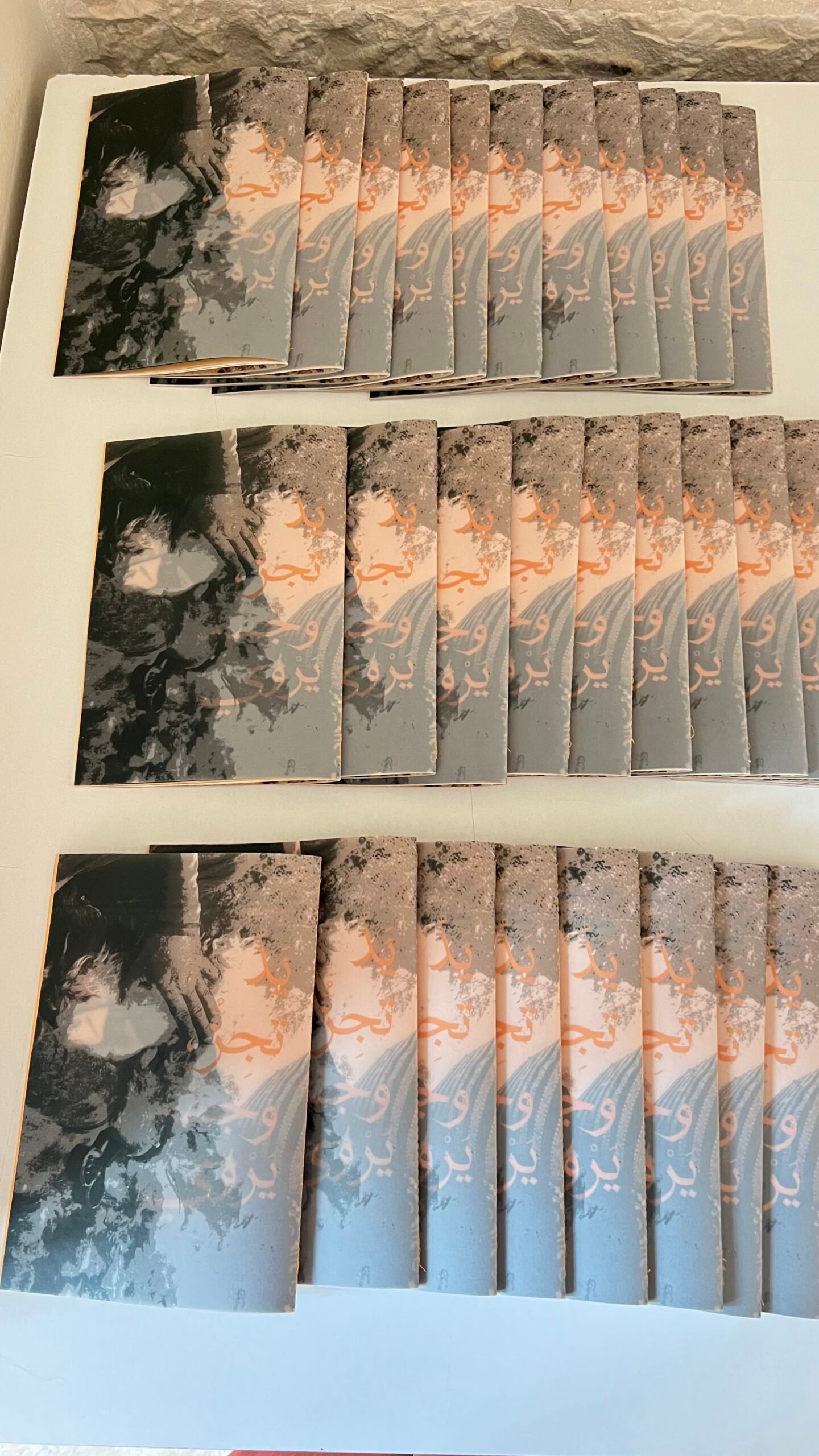
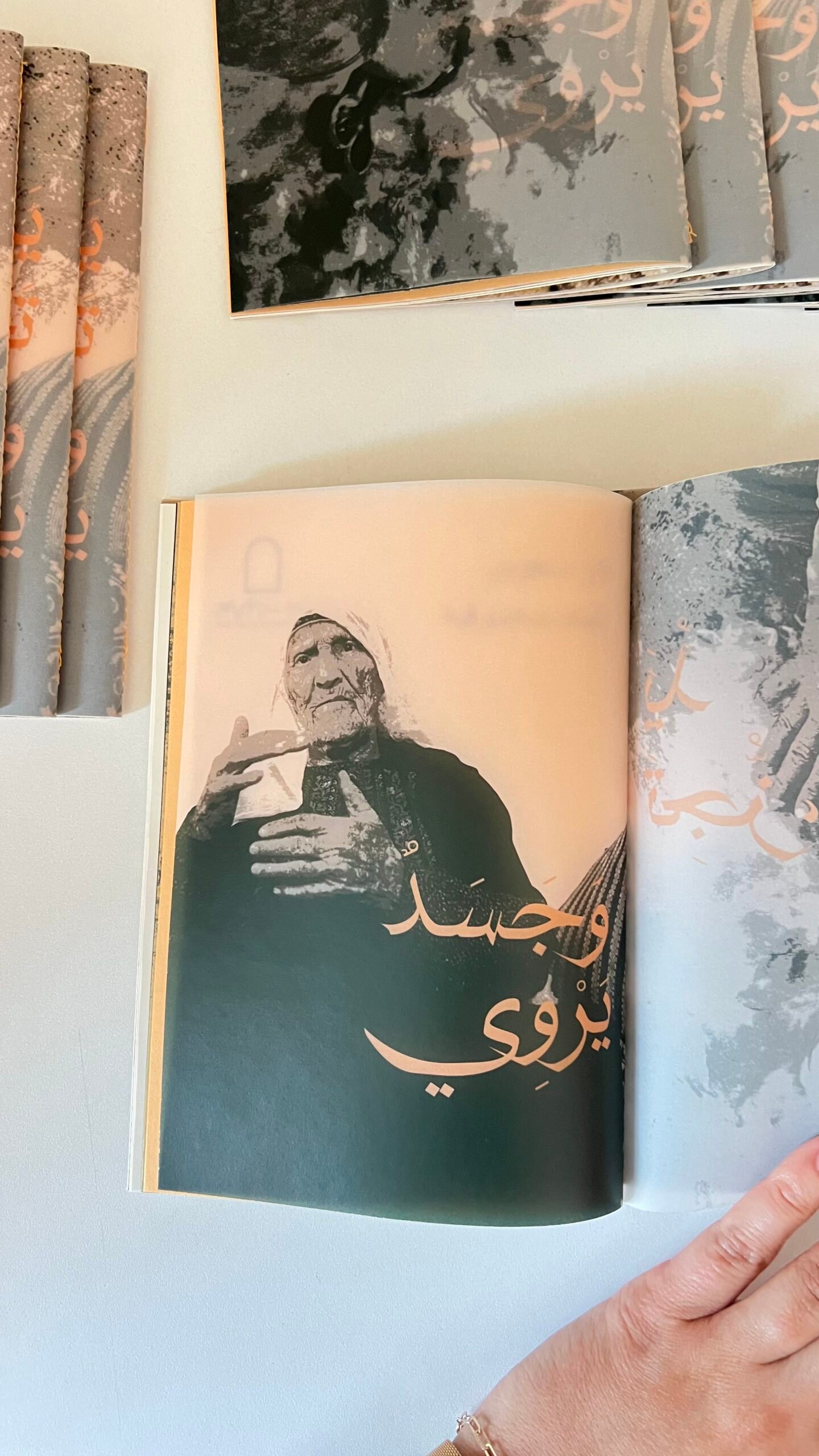
The exhibition hosted several activities that deepened its connection to the Palestinian context, all facilitated and organized by the Centre.
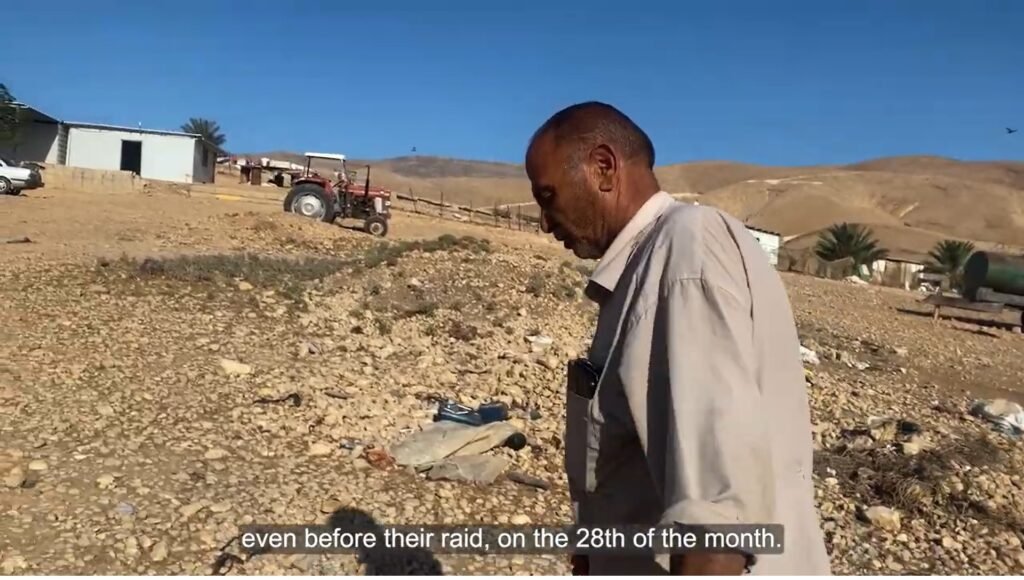
On 9 November, the talk “Wounded Maps: On Settlement, Herding, and the Resistive Economy” took place, mediated by Leila Abbas. I joined activist Hamze Zubaidat, who offered an analysis of the economy of herding communities, their social structures, and the transformations they have undergone since the Nakba. Drawing from the history of his own Zubaidat family ‘ ‘displaced from Bi’r al-Sabe’’. he shed light on how displacement reshaped herding life. In this context, we discussed my research and practice as a form of resistive economy rooted in our herding communities.
We also addressed settler colonialism and ongoing settler attacks, especially in the absence of media coverage, protection, or compensation. The conversation raised critical questions about the roles of institutions and civil society in supporting individuals and families who continue to face targeted violence and displacement.
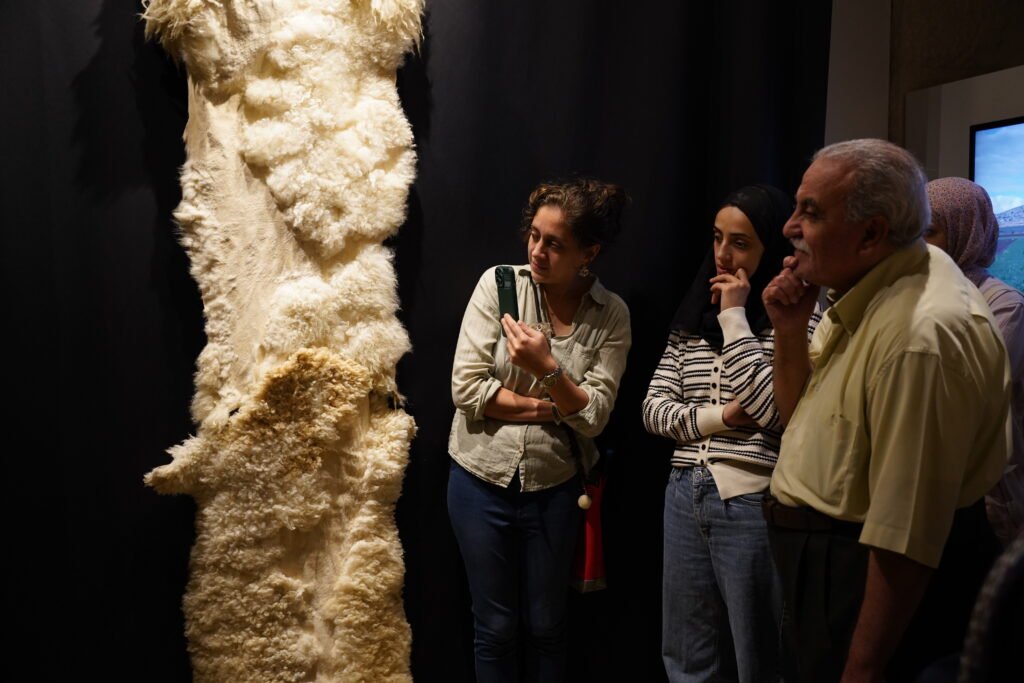
Another key event took place on 11 November: “A Little Ewe with a Tuft of Wool.” During this tour, storyteller and researcher Hamzeh Aqrabawi, whose work is deeply rooted in collective memory and identity, guided visitors through the exhibition in a narrative aligned with the Palestinian landscape, moving between the desert, countryside, and city. He presented a rich tapestry of folk heritage related to wool, its production, and its cultural significance. This event was held in partnership with the Mubadara Initiative for the Protection of Cultural Heritage.
Another workshop, “What Remains and What Has Left,” focused on one of my most cherished artworks. First exhibited at the AMQF “Salons” in Ramallah, the piece travelled to Spain, Portugal, and Finland, and won First Prize at the International Contemporary Textile Art Biennale – Contextile 2024 (more on this earlier in the blog). It was meant to be presented here along with three other artworks. However, the shipment from Titanik Gallery in Finland was mishandled and held by Israeli customs, which claimed that the organic materials posed a “threat.” After three exhibition postponements and two months of unsuccessful attempts to release the works, and without any serious response from the sender, the local shipping company delivered the final news via WhatsApp: all four artworks had been destroyed.
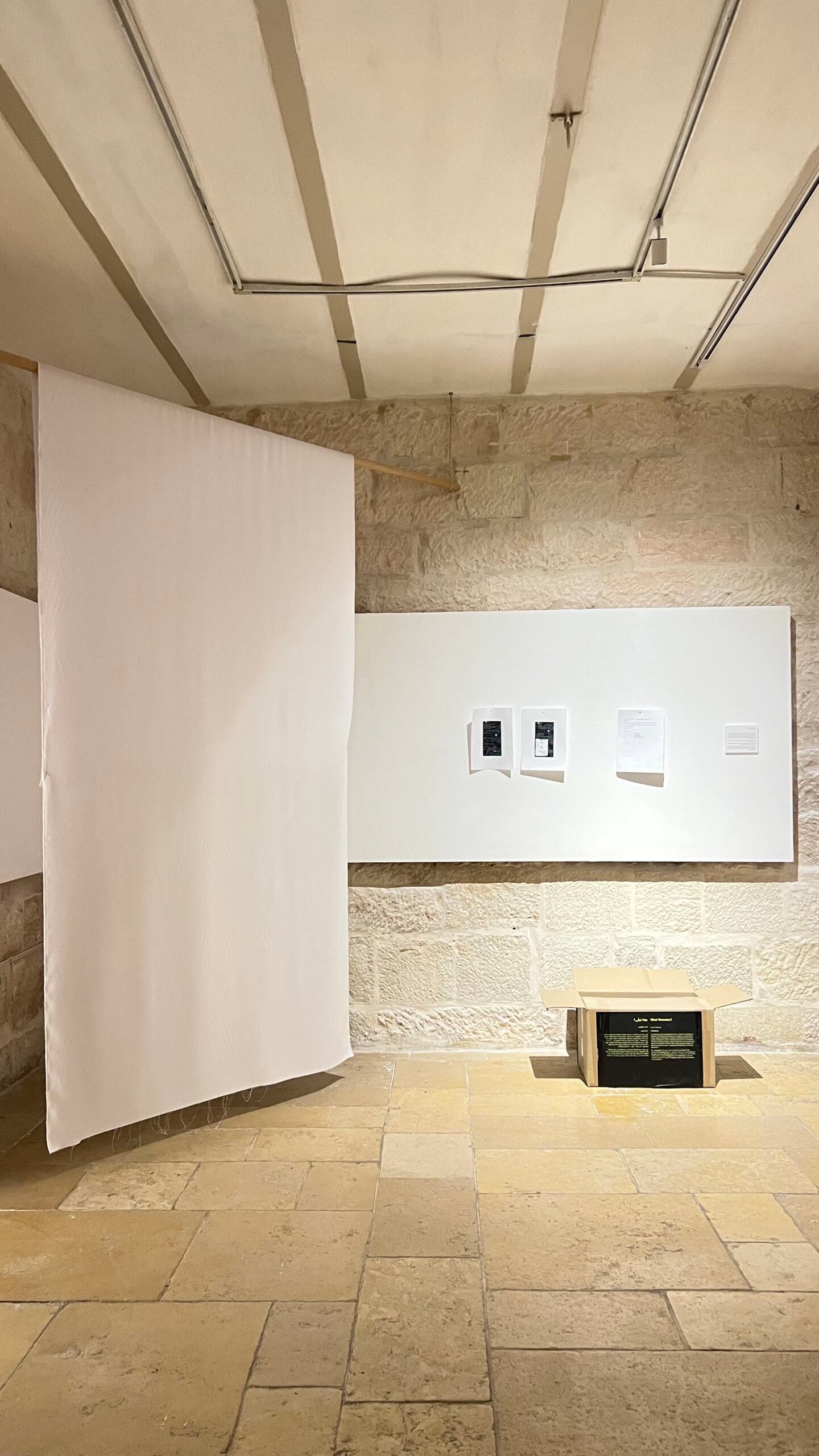
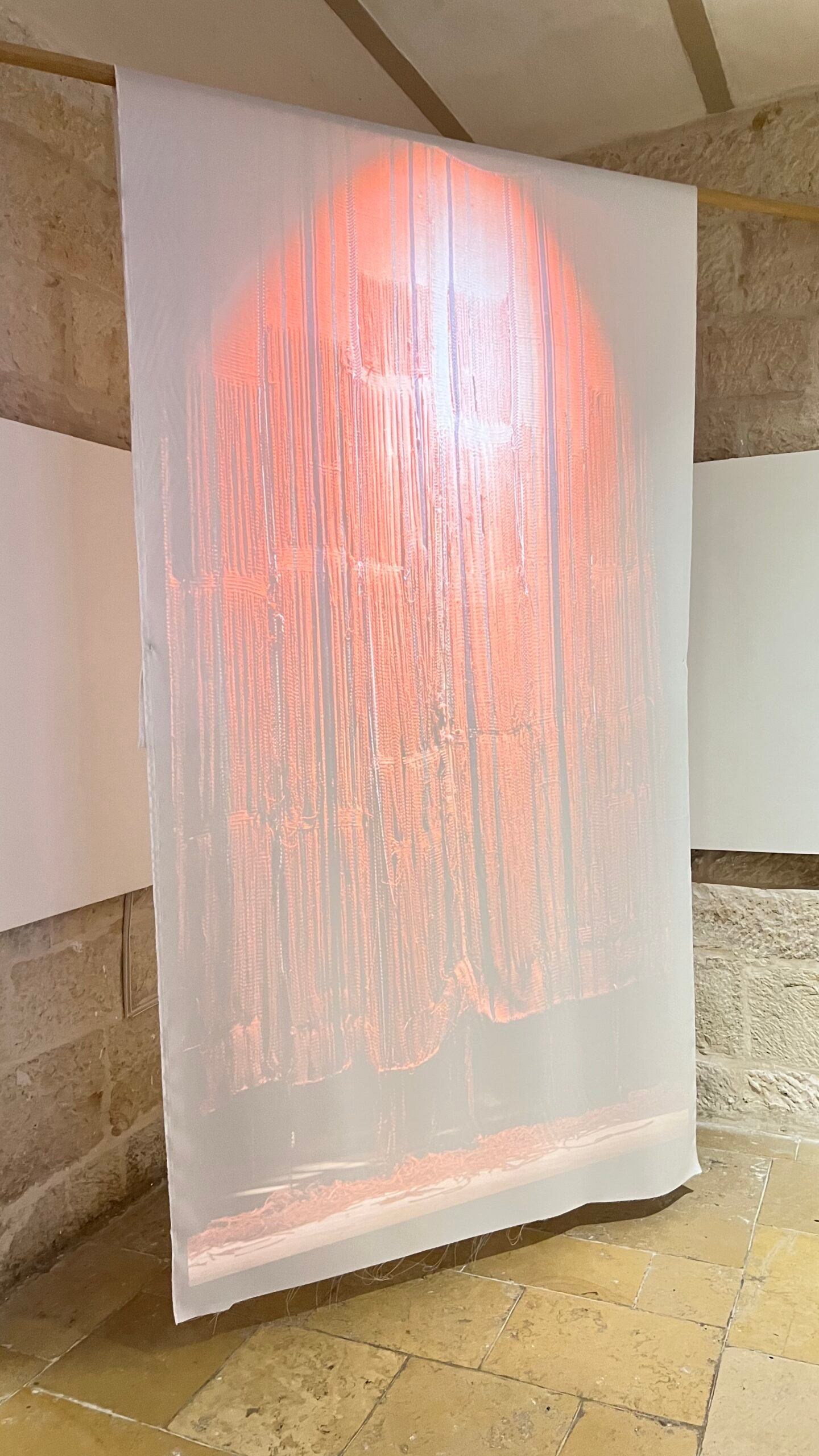
Riziq wrote about it ‘This event represents yet another extension of Israeli occupation control; the seizure and destruction of artworks exemplify the restrictions and prohibitions imposed on Palestinian life. In this sense, the work joins a long line of Palestinian artworks that have been removed through occupation policies that target not only cultural material but the very possibility of cultural practice.’
In the absence of the original work, Elias and I thought about exhibiting a second edition of the artwork, a white cloth onto which an image of the lost artwork is projected. Besides its original box and selected correspondence exchanged between the various parties.
E.Riziq added: “The irony of this event is stark: an artwork about cultural loss ends up being lost itself. Yet the proposition the artist offers—confronting the feeling of loss and allowing this disruption to guide practice rather than preservation—opens the discussion toward moving forward after confiscation and disappearance.”
For this reason, I led a workshop and a discussion to build a new version of the work and bring what was destroyed back into practice. This moment of the exhibition was another opportunity to gather around collective action in the face of two forms of loss and the layered forms of dispossession we face as Palestinians, where the meeting of hands becomes both a practice and a dialogue.
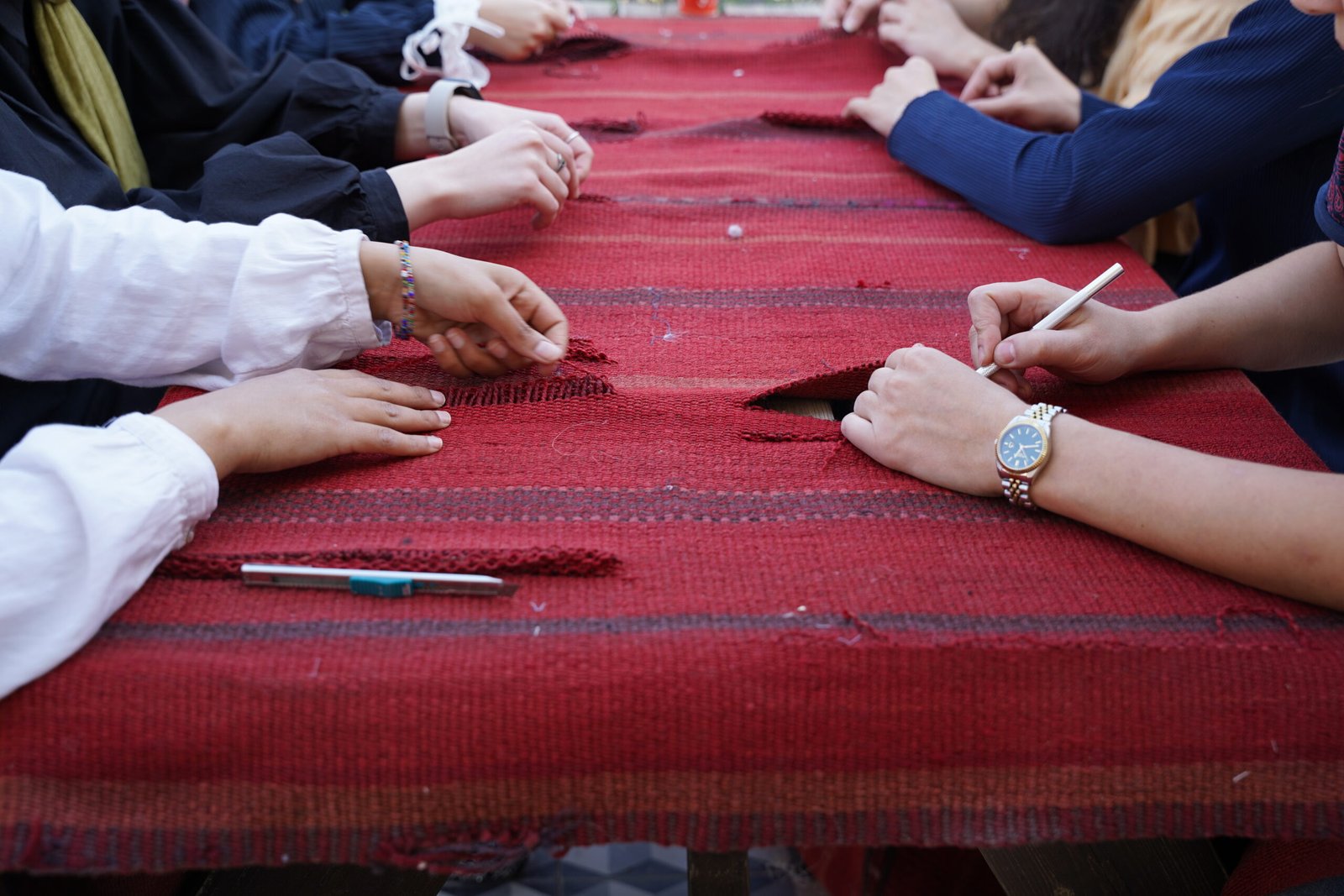
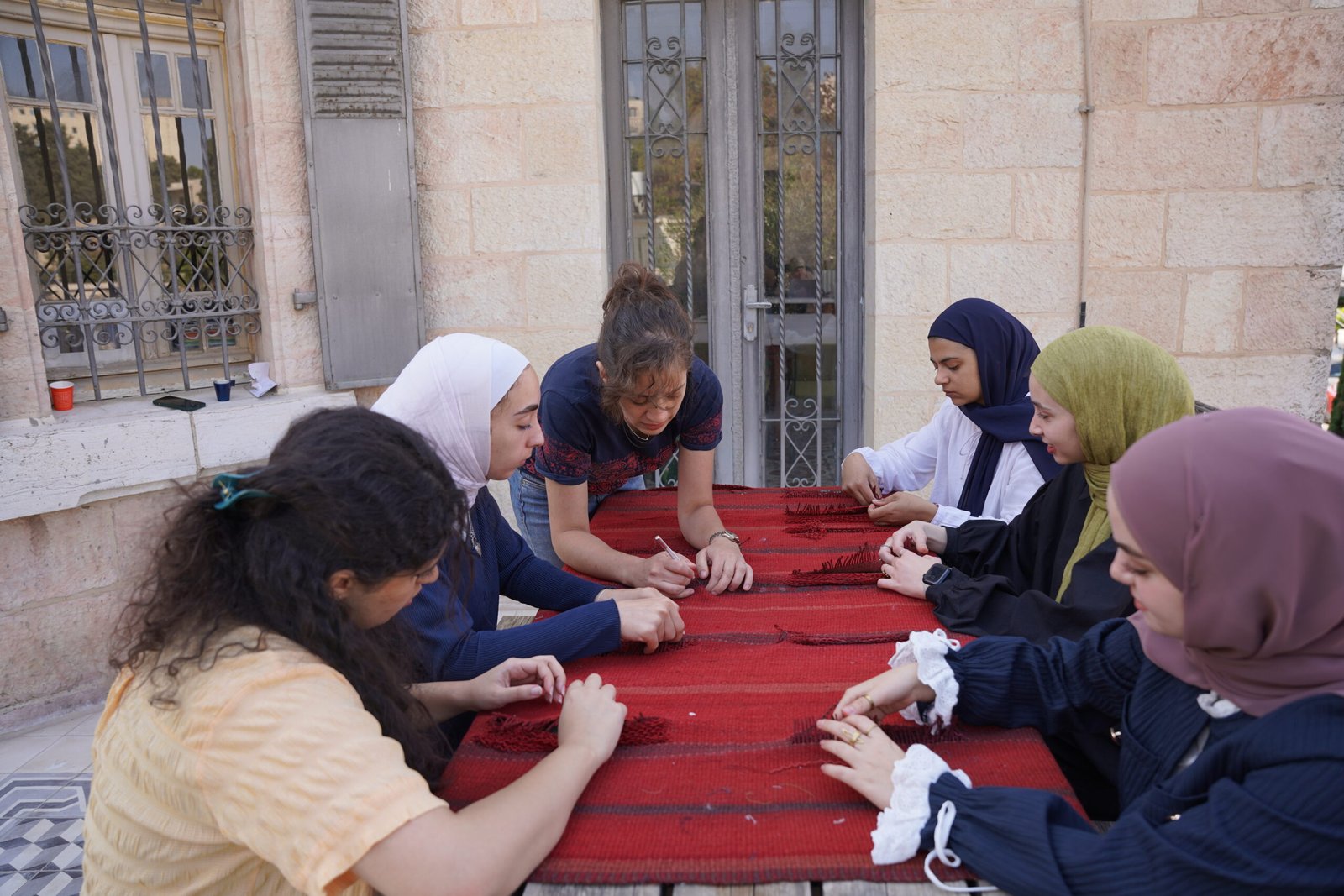
As for guided visits, the Centre facilitated four main tours for students from the Alyasmeen Charity, the Art and Interior Design Departments at Birzeit University, and a final closing tour on the last day of the exhibition.
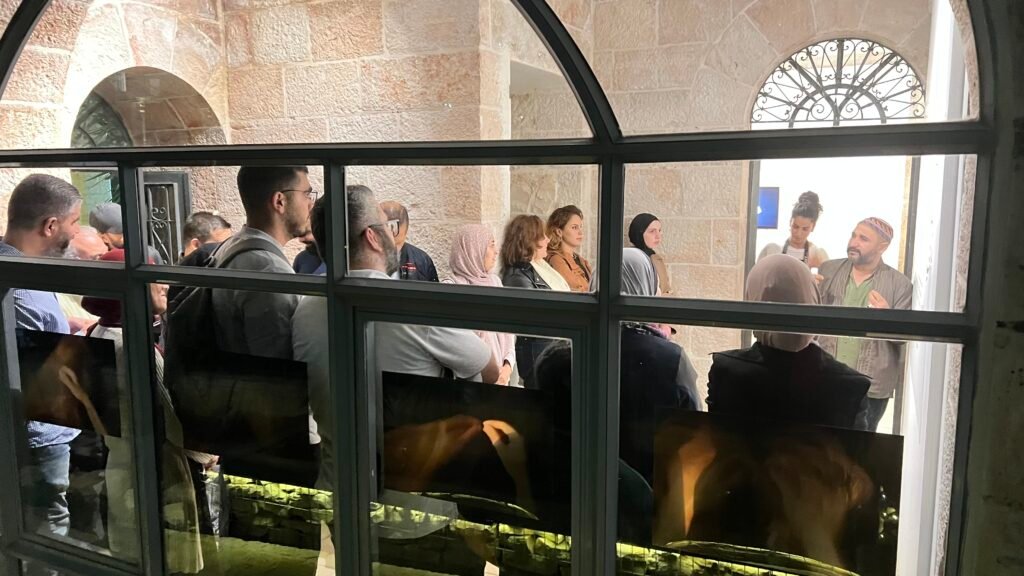
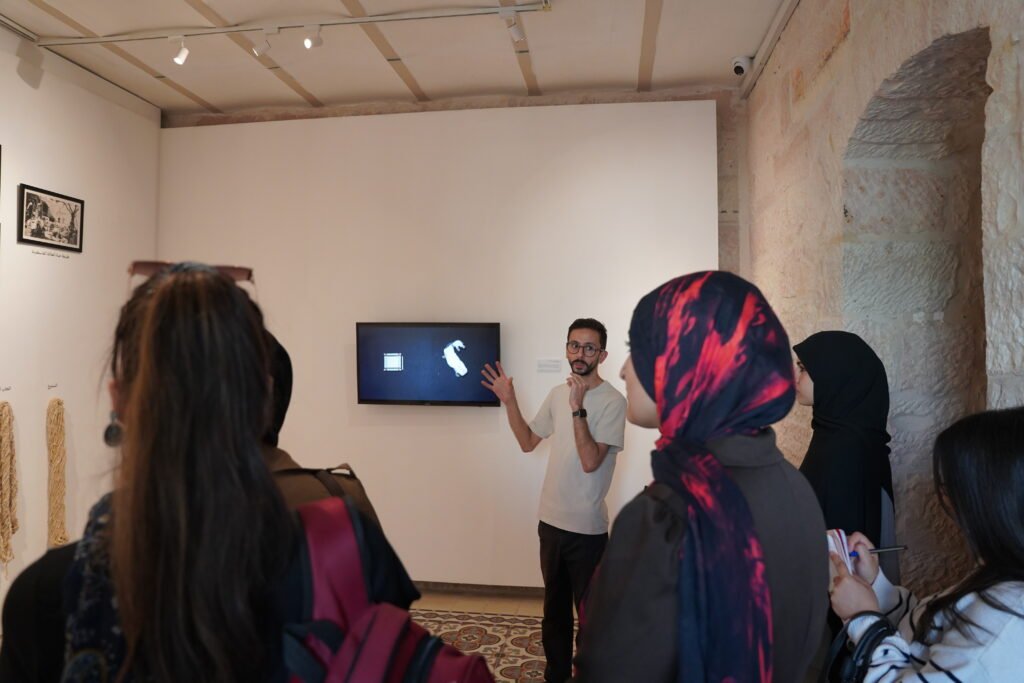
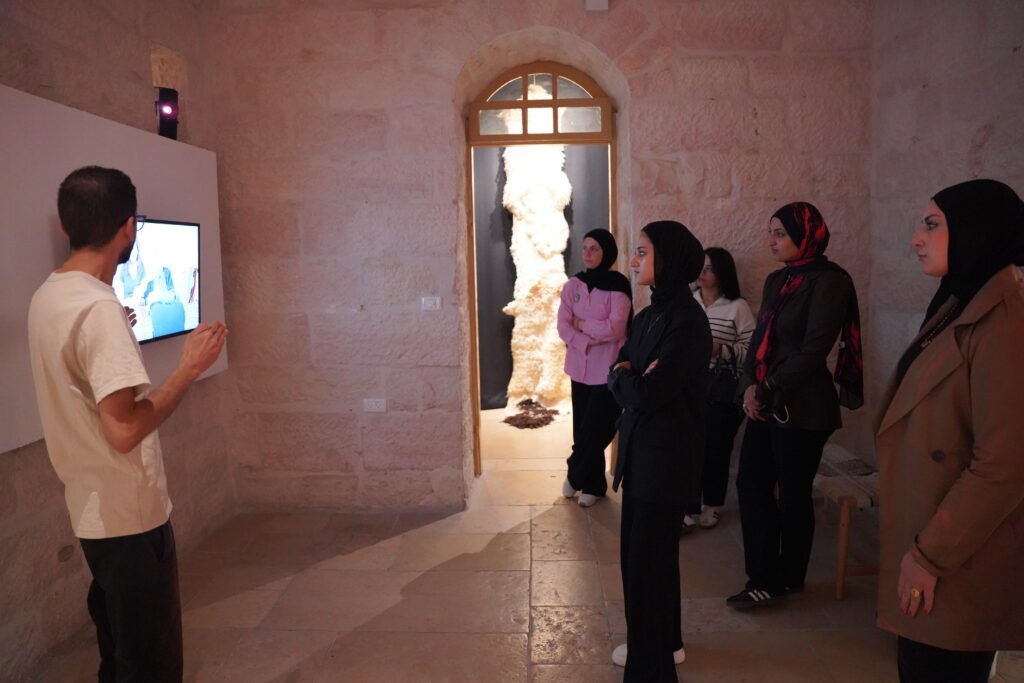
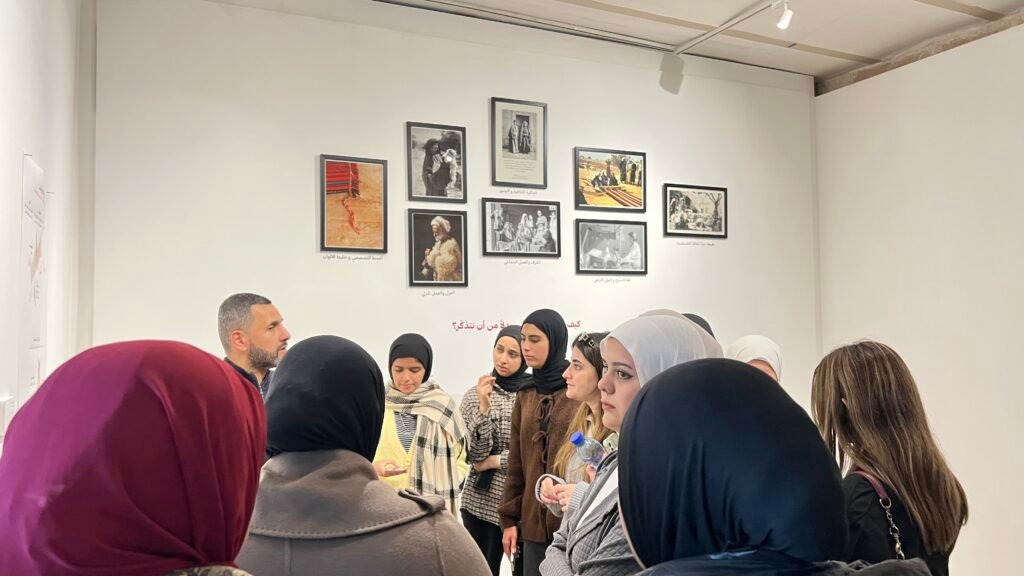
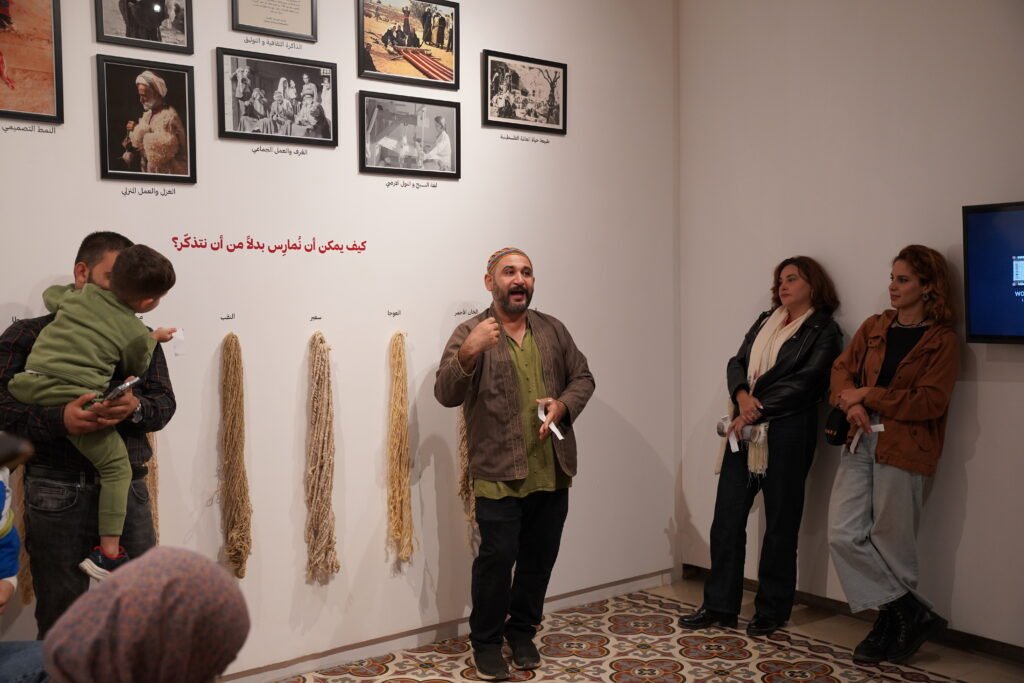

Several interviews were also conducted: with Qudsn by Mutasem Saqfalhait, Al Jazeera by Jumana Abdelrazzeq, and Al Arabi by Tala Halaweh and a personal blog by Majed Daghlas
Article by Jumana Abdelrazeq https://aje.io/166z9s : How Palestinian artists carry the New Visions spirit of resilience
Article by Tala Halaweh https://shorturl.at/26rm8 : عن البسط التي اختفت من بيوتنا: معرض فني يقتفي أثر الصوف الفلسطيني
Blog by Majid Daghlas: https://shorturl.at/eyApx : The hand shears, The body narrates
Exhibition credits:
Artist
Lara Salous
Curation
Elias Riziq
Design
Amjad Jarrar
Printing
iPrint Ramallah
Preparation & Production
The team of the Khalil Alsakakini Cultural Centre
(Lara Shawabkeh, Leila Abbas, Sara Mohammad Ali, Waad Al-Jarradat, Sarah Nabaa, Soha Zalloum, Marah Farhat, Mohammad Abdullatif)
Khalil Alsakakini Cultural Centre
Al-Raja Street, Al-Masyoun, Ramallah – Palestine
www.sakakini.org
This Exhibition was made possible with the support of the Arab Fund for Economic and Social Development.