For What Can Still Be Woven? 4th September – 29 November
Reflections on the Weaving the Green residency, Guimarães, Portugal, 2026
Following my award at Contextile 2024, I was invited to participate in Weaving the Green (Tecer o Verde), an artist residency programme established in partnership with Guimarães 2026 – European Green Capital. The programme brings together contemporary art, urban ecology, science, and traditional craftsmanship to cultivate ecological awareness through artistic interventions in public and natural spaces. Working in dialogue with local communities and partners, participating artists explore the relationships between textile art, sustainability, raw materials, the textile industry, and the region’s cultural traditions.
For me, this invitation opened a space to reflect on the increasingly fragile relationship between wool, land, and the communities whose lives depend on them.
Over the past three years, since October 2023, I have witnessed the intensification of settler violence against Palestinian shepherding families, particularly in the Ramallah area and the Jordan Valley. Attacks, intimidation, and forced displacement have driven families from their pastoral lands, disrupting generations of shepherding practices. Many shepherds have been forced to keep their flocks confined close to their homes, unable to graze freely and safely across the land. Sheep that once moved through open fields and hillsides are now increasingly restricted, as the landscapes sustaining both animals and communities become inaccessible.
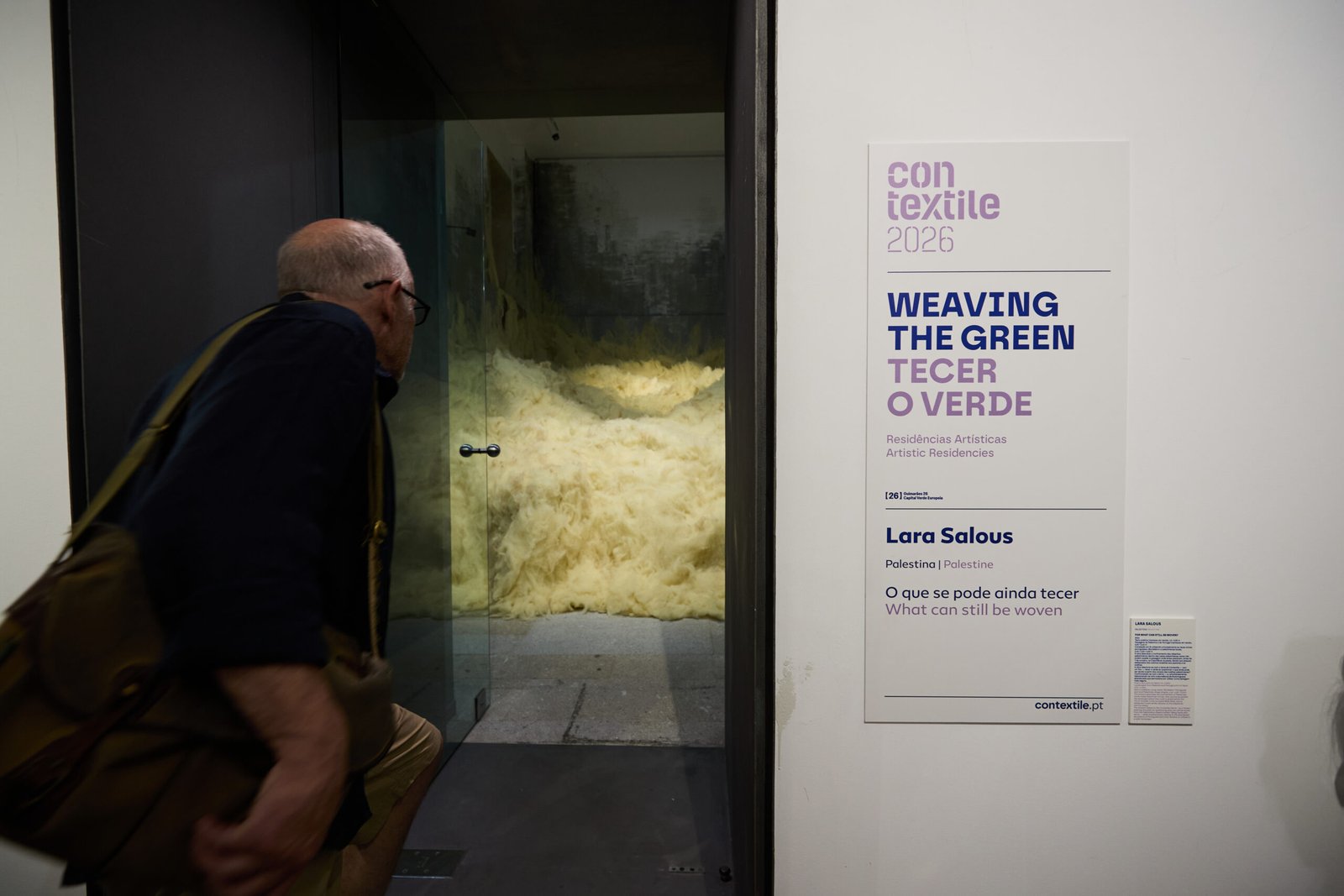
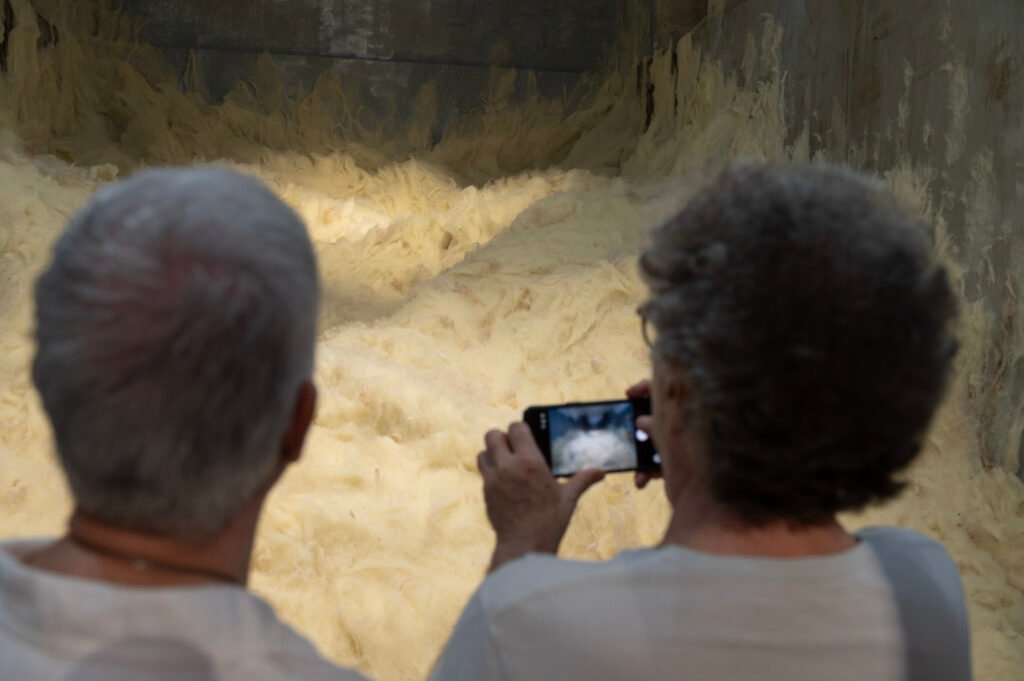
The concept for For What Can Still Be Woven? began to take shape through these reflections, and through my encounters with the landscapes and shepherding communities of Portugal. There, I encountered a different yet connected rupture: an abundance of sheep’s wool that is no longer being processed, despite the region’s rich textile history and Europe’s centuries-old traditions of wool production. A material that once sustained rural economies and remarkable textile industries is now often left without a meaningful place in contemporary production.
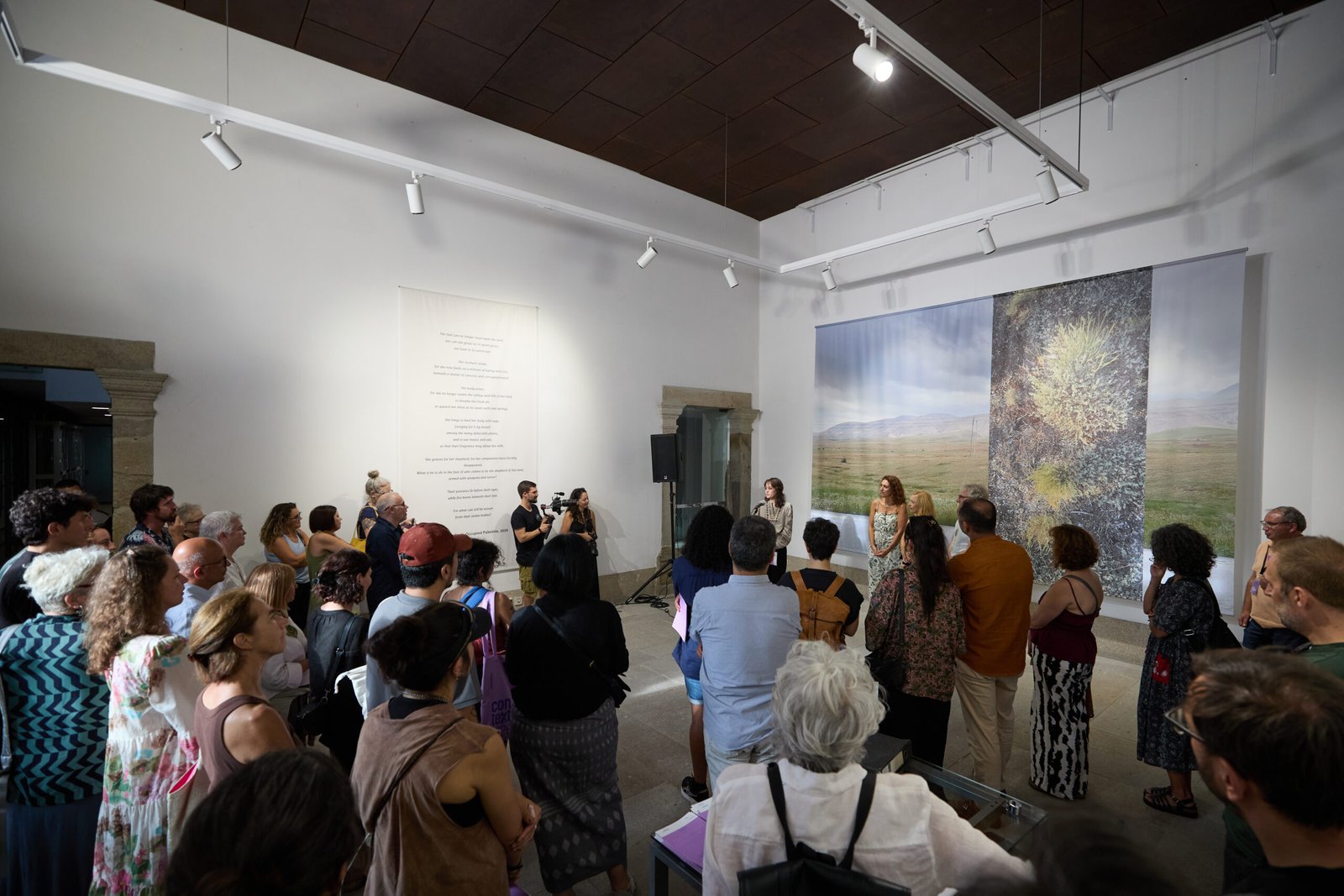
In Palestine, wool and the communities connected to it are threatened by displacement and the loss of access to land. In Portugal, wool remains abundant, yet much of it has lost its place within the systems of production that once gave it value. These contexts are distinct, shaped by different histories and political realities, but they brought me back to a shared question: How can we access the material when the relationships, knowledge, and conditions that sustain it are interrupted?
For What Can Still Be Woven? emerged from this question. It considers wool not simply as a raw material, but as a carrier of memory, ecological relationships, and cultural knowledge. Through my artistic practice, I seek to trace what remains, what has been interrupted, and what might still be carried forward through the act of making.
To weave today is not only to transform fibres into cloth. It is also to ask what connections can endure when the land itself is under threat, when inherited practices are disrupted, and when materials become detached from the people and places that have given them meaning.
More on Social Media